You Don’t Need More Construction Software—You Need a Connected Operating Architecture
Construction teams face costly inefficiencies due to disconnected tools. Syntecton's connected operating architecture unifies data in real time, enabling accurate financial management, margin…
Construction teams keep piling on more tools, yet the handoffs between finance, project controls, and execution still create costly gaps. The real problem isn’t the number of software solutions—it’s the missing connected operating architecture that ties all data together in real time. When you manage from one single source of truth, like with Syntecton's Financial Management Module, you protect your margin and get the clarity you need for fiscal planning. Here’s why connected operating architecture changes everything.
The Problem with Tool Sprawl
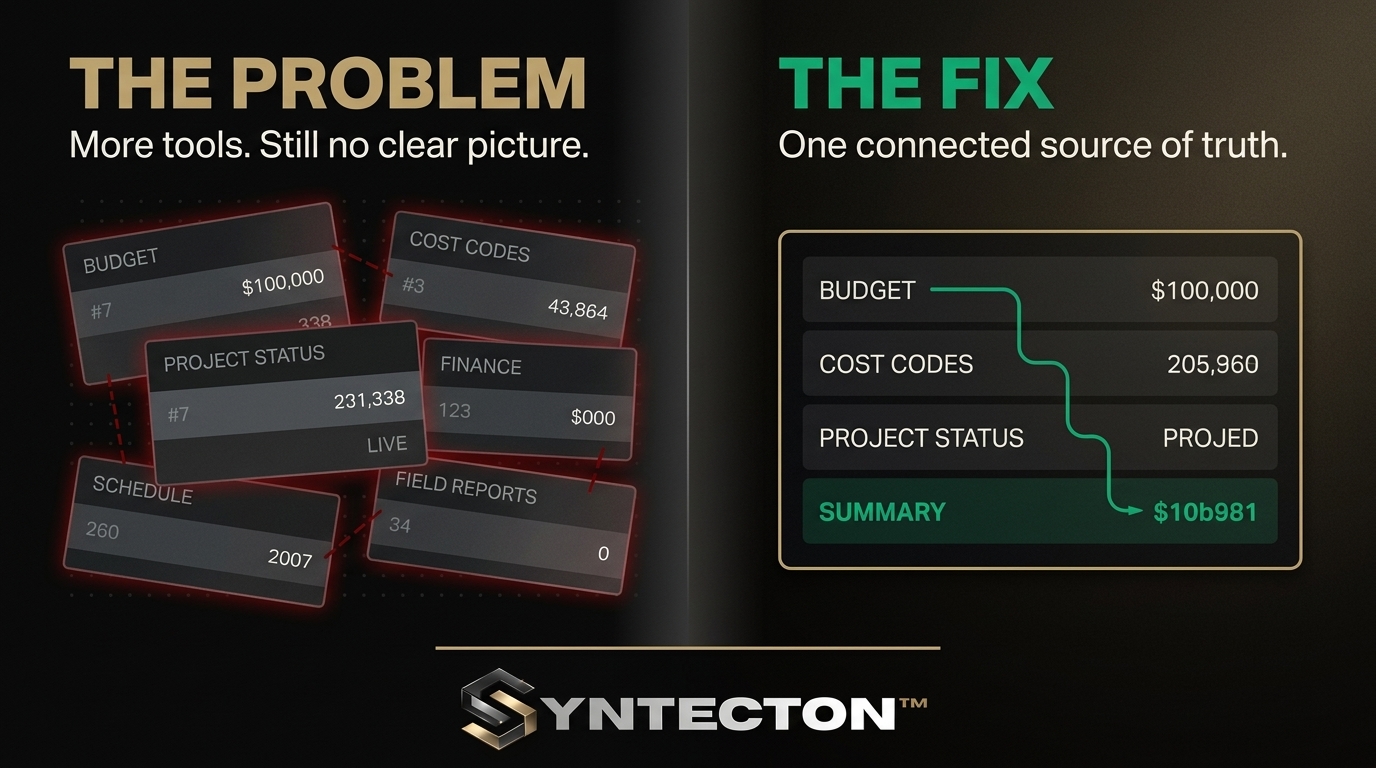
Construction teams are often overwhelmed by the number of tools they use. What's the real issue? It's not having too many tools but lacking the right ones that communicate effectively.
Fragmented Software Stacks
When every department uses a different software, chaos ensues. You might have accounting on one platform, project management on another, and field execution on a third. This disconnect means that each team sees a different version of the truth. For instance, your finance team might be looking at a budget that differs from what your project managers see on the ground. This fragmentation leads to discrepancies and inefficiencies. Construction leaders should have a unified view of project details to make informed decisions. When systems don't integrate, it becomes impossible to track real-time progress, leading to potential overruns and missed deadlines.
Hidden Losses at Handoffs
Handoffs between different teams are often where things fall through the cracks. Imagine your finance team approving budgets without knowing the actual project status. This lack of coherence can result in hidden costs that eat away at your profit margins. With each department working in isolation, critical updates might get lost or delayed. It's like playing a game of telephone where the message is always garbled by the time it reaches the last person. Instead of smooth transitions, the handoff points become choke points where time and resources are wasted.
The Need for a Unified System
The solution is clear: a unified system where all data flows seamlessly. This means moving away from isolated tools and toward a connected operating architecture. By having everything in one place, you ensure that each team accesses the most current information, reducing the risk of errors. This unified approach also simplifies training and onboarding, as teams only need to learn one system. Moreover, a single system allows for better forecasting and planning, since everyone is working from the same set of data. It's the difference between managing chaos and orchestrating a well-tuned machine.
The Power of a Connected Operating Architecture
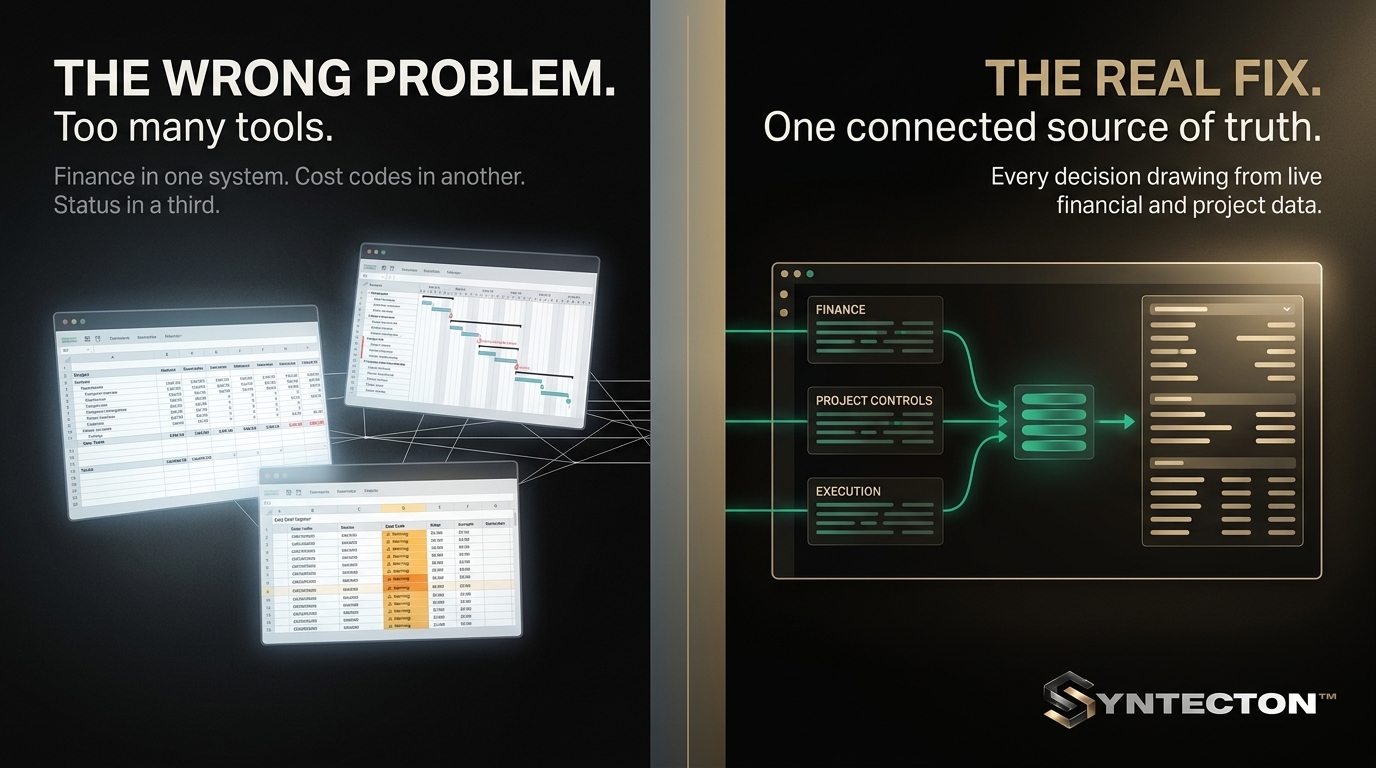
Once you eliminate tool sprawl, you open the door to efficiency and clarity. Here's how a connected operating architecture empowers your construction management.
A Single Source of Truth
Imagine having one dashboard where every piece of data is accurate and up to date. This is what a single source of truth offers. It means that instead of juggling multiple reports, you have a clear view of where projects stand. This approach not only saves time but also reduces errors. By centralizing information, you enable your teams to make decisions based on the same data set. Everyone from the CFO to field managers can access the same report, ensuring alignment across the board. This transparency builds trust and accountability within the organization.
Real-Time Job Costing and Forecasting
Real-time job costing and forecasting become possible when your data is connected. You no longer have to wait until month-end to see where you stand financially. Instead, you can track costs as they occur, compare them with the budget, and adjust as needed. This real-time insight helps you identify trends and address issues before they escalate. Your project managers can see exactly how their decisions impact the bottom line, enabling proactive adjustments. This visibility is crucial for maintaining control over finances and ensuring projects stay on budget.
Margin Protection through Unified Controls
Unified controls safeguard your margins by ensuring that all financial activities are tracked and managed consistently. When you're using different systems, it's easy for costs to slip through the cracks. A connected architecture closes these gaps by providing a comprehensive view of financial activities. This includes everything from budget approvals to change order management. By having all financial data in one place, you can easily spot discrepancies and address them promptly. The result is a more predictable financial outcome and reduced risk of costly surprises.
Syntecton: The Solution for Construction Management
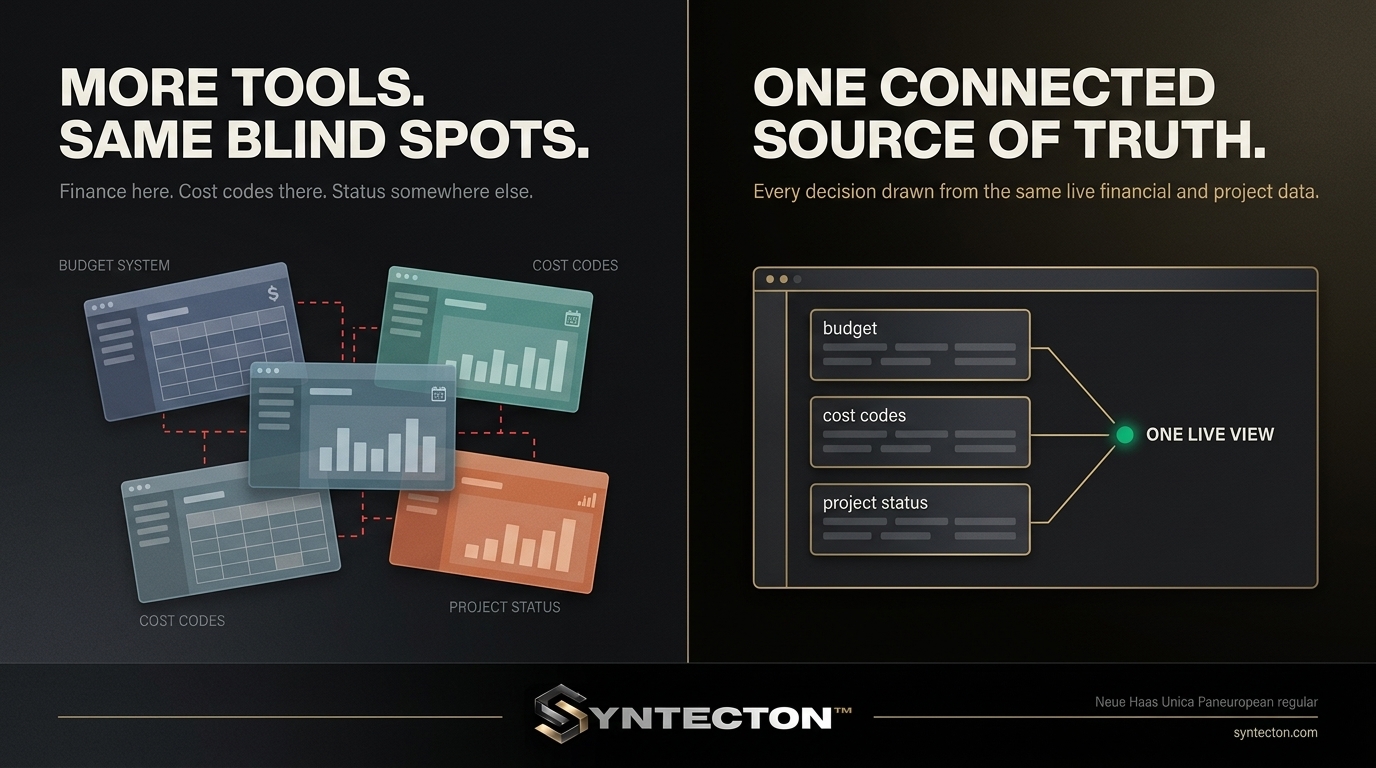
Syntecton offers an integrated solution that addresses these challenges head-on. Let's dive into how its features stand out.
Features of the Financial Management Module
Syntecton's Financial Management Module provides an all-in-one view of your construction financials. It encompasses budgeting, invoicing, and cost tracking, all connected seamlessly. This module ensures that all your financial data is accessible in real-time, allowing for accurate and timely decision-making. With built-in reporting tools, you can generate comprehensive reports that reflect the true financial health of your projects. This transparency simplifies audits and compliance checks, saving time and reducing stress.
Benefits of Construction ERP Integration
Integrating your construction ERP with Syntecton provides unparalleled benefits. It ensures that all your project data, from cost codes to work-in-progress reports, is updated and accurate. This integration eliminates the need for manual data entry, reducing the risk of errors. It also streamlines communication between departments, ensuring everyone is on the same page. By integrating ERP systems, you enhance collaboration and improve overall project coordination. This leads to smoother operations and better project outcomes.
Requesting a Demo and Assessment
Are you ready to experience the benefits of a connected operating architecture? Request a demo of Syntecton's Financial Management Module today. See firsthand how it can transform your construction management processes and protect your margins. A demo will provide you with a comprehensive understanding of how Syntecton can be tailored to fit your specific needs. This personalized approach ensures that you get the most out of your investment and achieve your project goals.
Frequently Asked Questions
What is a connected operating architecture?
A connected operating architecture is a system where all construction data is integrated into a single platform. This ensures that all teams access the same real-time information, improving decision-making and reducing errors.
Why is tool sprawl a problem in construction?
Tool sprawl occurs when different teams use various software solutions that don't communicate. This results in fragmented data, leading to errors, inefficiencies, and hidden costs that can hurt project profitability.
How does Syntecton help in construction management?
Syntecton provides a unified platform that integrates financial management, project controls, and field execution. This integration ensures seamless communication and accurate data flow, protecting margins and improving project outcomes.