The Construction Operating System

Your projects run on software. Your company runs on memory.

Six boards that teach a construction company how to build and run its operating system — the doctrine, the vocabulary, and the first thirty days. Direction down, exceptions up, decisions on the record.

Board 1

The Operating Loop

How the whole system turns: direct, align, measure, surface, decide, execute.
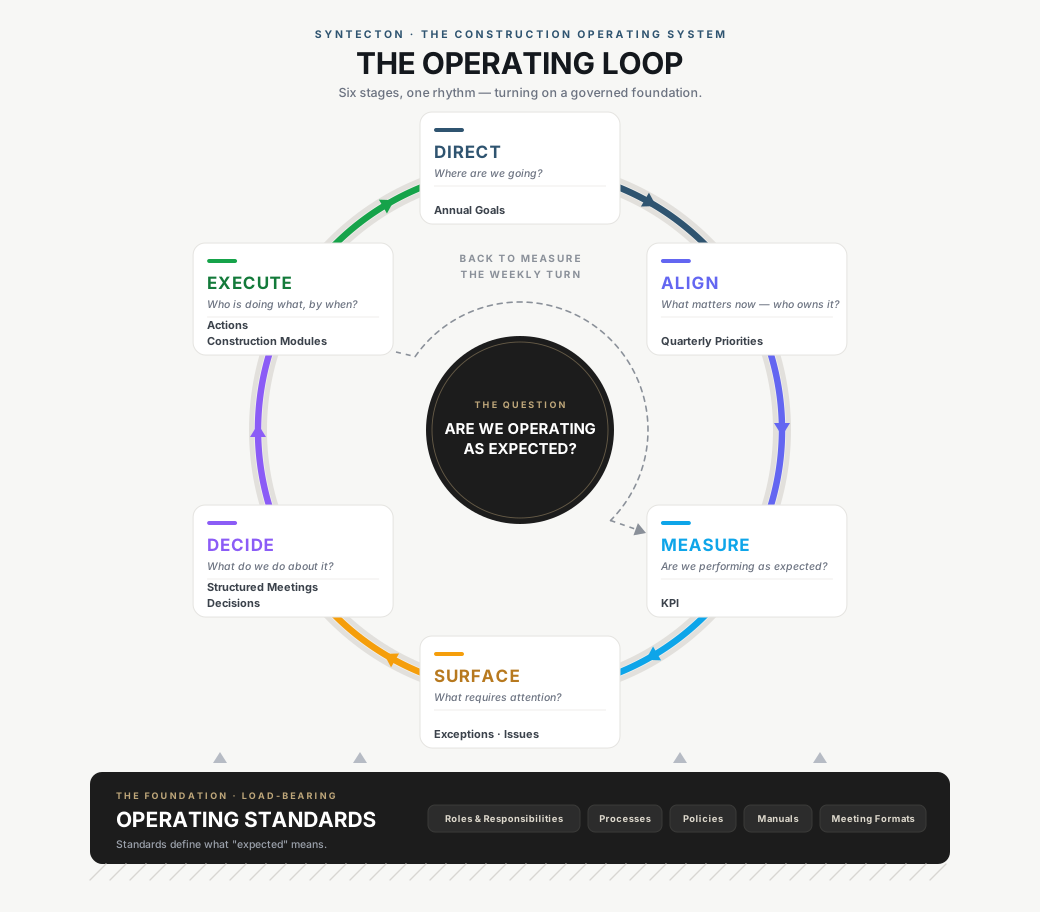
The COS Operating Loop: direct, align, measure, surface, decide and execute, turning on a foundation of Operating Standards.
The COS Operating Loop — six stages on an Operating Standards foundation.
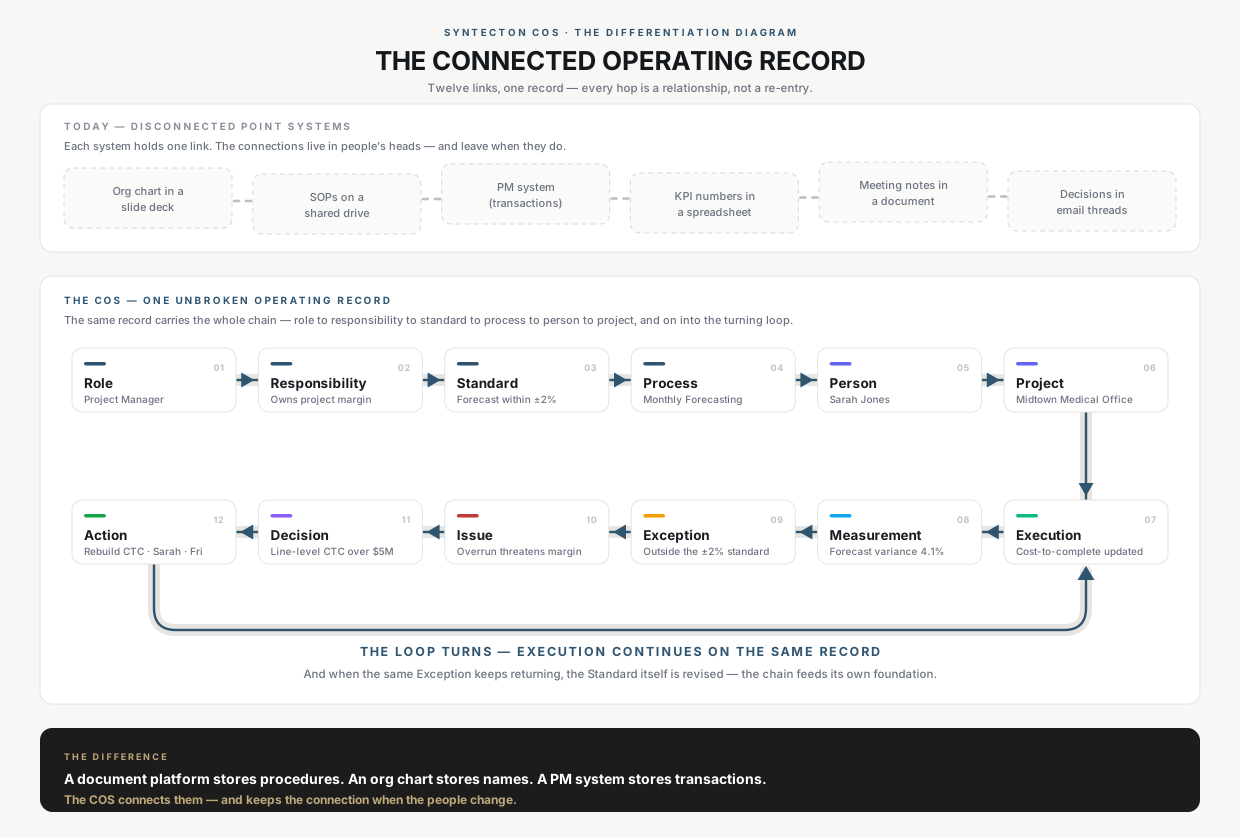
One connected operating record running role to responsibility to standard to process to person to project to execution to measurement to exception to decision to action, set against fragmented point systems.
The Connected Operating Record — one unbroken chain, versus fragmented point systems.

SYNTECTON COS — THE OPERATING LOOP

Board 1 of the COS Manual · The philosophy every other board follows
The Philosophy · One Sentence
Syntecton connects company direction to project execution through measurable accountability, exception-driven management, disciplined decisions, and one operating record.
A construction company should operate as one connected chain of accountability — from company direction to the work happening on each project.
Direction flows down. Accountability stays clear. Exceptions rise. Decisions become action. Execution feeds the record.
1The Operating Loop — six stages, then again
DIRECT
Where are we going?
ObjectsLong-Term Direction · Annual Goals
ALIGN
What matters now — and who owns it?
ObjectsOrganization Map · Quarterly Priorities · Owners
MEASURE
Are we performing as expected?
ObjectsKPI measures · the live project record
SURFACE
What requires attention?
ObjectsExceptions · Issues · Escalation
DECIDE
What are we going to do about it?
ObjectsStructured Meetings · Decisions
EXECUTE
Who is doing what, by when?
ObjectsActions · the construction modules
STANDARDIZE Underneath the whole loop sits the governed foundation — Operating Standards: roles & responsibilities, processes, policies, manuals, and meeting formats. The loop asks "are we operating as expected?" — Standards define what "expected" means.
2Operating Beliefs
Every meaningful outcome has an owner — units organize responsibility; people own outcomes.
Important targets are measurable — and owners understand them.
Exceptions surface before they become surprises — good operations stay quiet; deviations rise.
Issues reach the level capable of resolving them — escalation moves one record up, with history.
Meetings produce decisions, not re-reporting of what the system already knows.
Decisions requiring work become accountable Actions — what, who, when.
Projects stay connected to the company operating them — never a parallel system.
Operational records become management records wherever possible.
3Why this is construction-native

Generic management software

"Gross margin: 13.6%" — typed in by hand.

"Project is At Risk" — someone's opinion.

"Discuss Project A" — because someone remembered to.

Meeting notes in a document nobody reopens.

Syntecton COS

Gross margin derived from live project forecasts — the same record the PM already maintains.

An Exception with evidence — target vs actual, from defined thresholds.

Project A surfaced itself — its operating thresholds were exceeded.

Decisions and Actions are records that chase their owners and reload next week.

The test: if this could be sold unchanged to a dentist's office, we designed it too generic. Projects are embedded in the structure; the execution machinery — Financial Hub, Field, Safety, Bidding — feeds the loop and is directed by it.
4One connected operating record
Role Responsibility Standard Process Person Project Execution Measurement Exception Decision Action
A document platform stores procedures. An org chart stores names. A PM system stores transactions. The COS connects them — and because recurring exceptions can reveal a weak standard, the chain loops back to its own foundation: the operating system improves itself.
5Guardrails — how the loop stays honest
Alignment is optional; accountability is not. Goals may support goals above them — no forced cascade, ever.
Not every deviation is bureaucracy. An Exception can simply be acknowledged. Escalation is intentional.
No step of the chain is mandatory. An Action can exist without an Issue; a Decision may need no Action.
Don't manually report what the system knows. Reviews read the record; people add judgment.
The COS is not HR software. The person view answers what someone owns — never reviews, pay, or PTO.
History is never rewritten. Quarters close intentionally; standards version; records outlive their quarter.
OUTCOME: The company runs on a rhythm — direction set, ownership clear, numbers watched, trouble surfaced early, decisions on the record, execution accountable. Every week, the loop turns.
Board 2

The Organization Map & Structure

The company's front door. Type says what, parent says where.
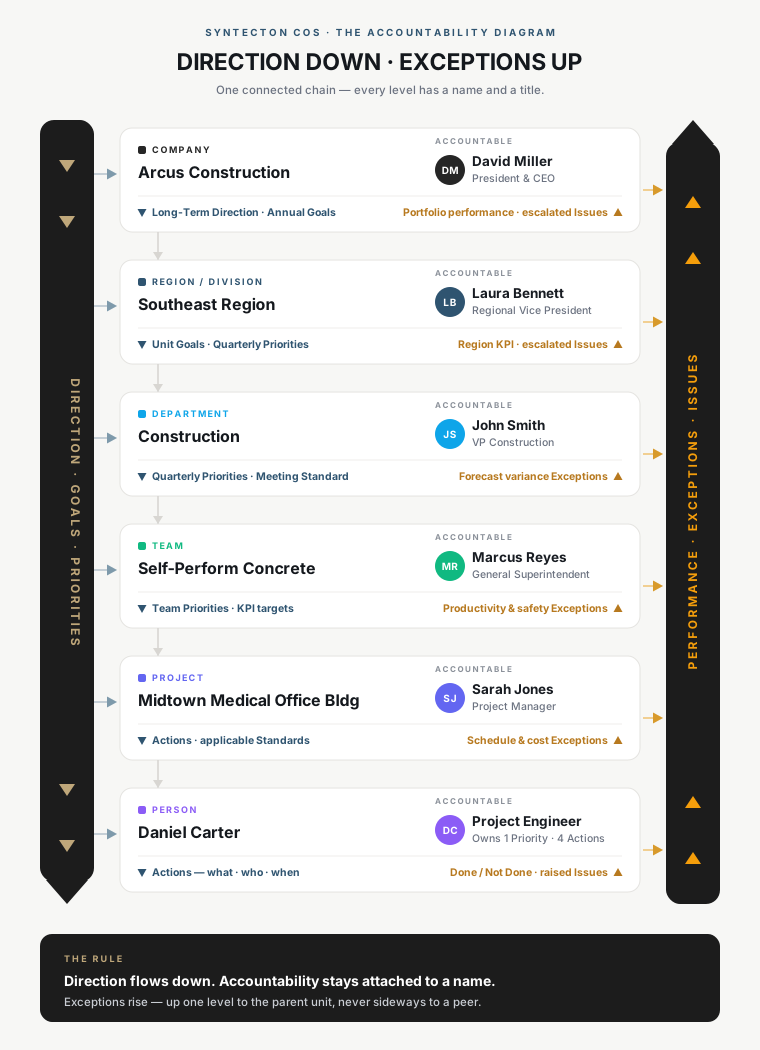
Direction flowing down through the Organization Map while performance, exceptions and issues rise back up.
Direction flows down. Performance, exceptions and issues rise.

SYNTECTON COS — THE ORGANIZATION MAP & STRUCTURE

Board 2 of the COS Manual · Where the company's structure lives — and nowhere else
The Doctrine
The Map is the company's home page and its single source of structural truth.
If the Map says it, it's how the company is built. If the Map doesn't say it, it isn't.
Every unit of the company — regions, divisions, departments, teams, offices — lives on one recursive map. Projects and people attach to it by reference, never copied.
The Map shows how the company is built. Click into any unit to run it.
1Two sides of one object — MAP = STRUCTURE · WORKSPACE = OPERATION

The Map — structure

The org chart lives here and only here. Units, nesting, leaders, headcount, attached projects — plus live health: At Risk and open Issues counts on every card.

The Map answers: how is this company built, and where is it hurting? A VP scanning it sees which branch has two at-risk jobs before anyone writes a status email.

The Workspace — operation

Tap a unit and the chart disappears. You are now inside that unit's operating workspace: Overview · Direction & Goals · Priorities · KPI · Meetings · Issues · Actions · Team.

The workspace answers: how is this unit running? Same framework on every unit — the Concrete crews' team page and the company page work identically, at different altitude.

ONE STRUCTURE There is no second org chart in a slide deck, no shadow structure in a spreadsheet. Meetings, KPI, Priorities, Issues and Actions all hang off the unit — so keeping the Map honest keeps the whole operating system honest.
2Type says WHAT · Parent says WHERE
Region Division Department Team Office Business Unit Custom
CompanyArcus Construction RegionSoutheast DepartmentConstruction TeamSelf-Perform Concrete
CompanyArcus Construction DivisionSpecial Projects RegionMidwest OfficeKansas City
Every node is the same recursive Operating Unit. The type describes what kind of thing it is; the parent describes who it reports to. A Region under the Company and a Region inside a Division are the same object — no special cases, no fixed levels, no maximum depth. A specialty contractor with one office and four crews and a GC with three regions build from the same seven types.
3Every unit has a leader — a name and a title
Department
Construction
JS John SmithVP Construction
142 People26 Projects1 At Risk · 4 Issues
Accountability is a name and a title on the card — never a committee, never "the ops group," never blank. A unit without a leader is a vacancy to fill, shown as exactly that.
Titles are real. The leader's title comes from the Role Library in Operating Standards — VP Construction, General Superintendent, Precon Director — with defined responsibilities behind it, not a free-text label.
When forecast variance blows past tolerance in Construction, the Exception has an address: this unit, this leader. The card is where escalation starts and where it stops.
4Team ≠ Directory

The Directory

Everyone the company works with: your people, the drywall sub's PM, the owner's rep, the testing lab.

Answers: who do we know, and how do we reach them? Contact records, vendors, portal access.

The Team tab

People placed on the Map where they actually work. A superintendent sits in Field Ops — not wherever a distribution list put her.

Answers: who works here, and what do they own?

One person, one identity. John Smith leads Construction, runs two projects, and sits on the leadership meeting — one record, surfaced everywhere by relationship, never duplicated. Move him and every goal, action, and meeting seat follows.
5Start empty · Build honestly · Restructure by moving
1Start with one nodeA new company's map is the company itself. No template org chart is pre-seeded.
2Add real unitsModel the company you HAVE — if estimating is two people at one desk, it's one team, not a "Preconstruction Division."
3Name each leaderA real person, a real title. If nobody leads it, the map says vacant — it doesn't pretend.
4Place the peopleEveryone lands where they actually work, not where the letterhead says.
5Attach the projectsJobs attach to the unit that operates them — by reference, never copied.
Restructuring is moving, not rebuilding. Splitting Field Ops into two regional teams, or moving a self-perform crew under a new division, is a move on the Map — the unit carries its goals, KPI history, meetings, issues and actions with it, and the history stays. Last year's quarters still read exactly as they were run. The map you wish you had is a plan; the map you have is a record — the COS runs on the record.
6Guardrails — how the Map stays true
The Map is internal-only. Subcontractors, owners, and design partners never see it — they see projects and portals, never the company's structure.
No committee ever owns a unit. Shared leadership is unresolved leadership. One name, one title, per card.
Model reality, not ambition. A unit that exists only to look complete on the chart poisons every roll-up above it.
Restructure by moving units — never delete-and-rebuild. Deleting a unit to "clean up" destroys an operating record that closing or moving would have kept.
Projects and people attach by reference. Nothing on the Map is a copy — a job appears under its unit and in the execution environment as the same record.
The Map is not HR software. It shows who leads and who works where — never compensation, reviews, or PTO.
OUTCOME: One map, kept honest. Anyone in the company can answer "who owns this?" in one click — and when a job goes sideways, the escalation path is already drawn.
Board 3

Planning: Direction, Goals, Priorities

Long-term direction down to the few things that matter this quarter.
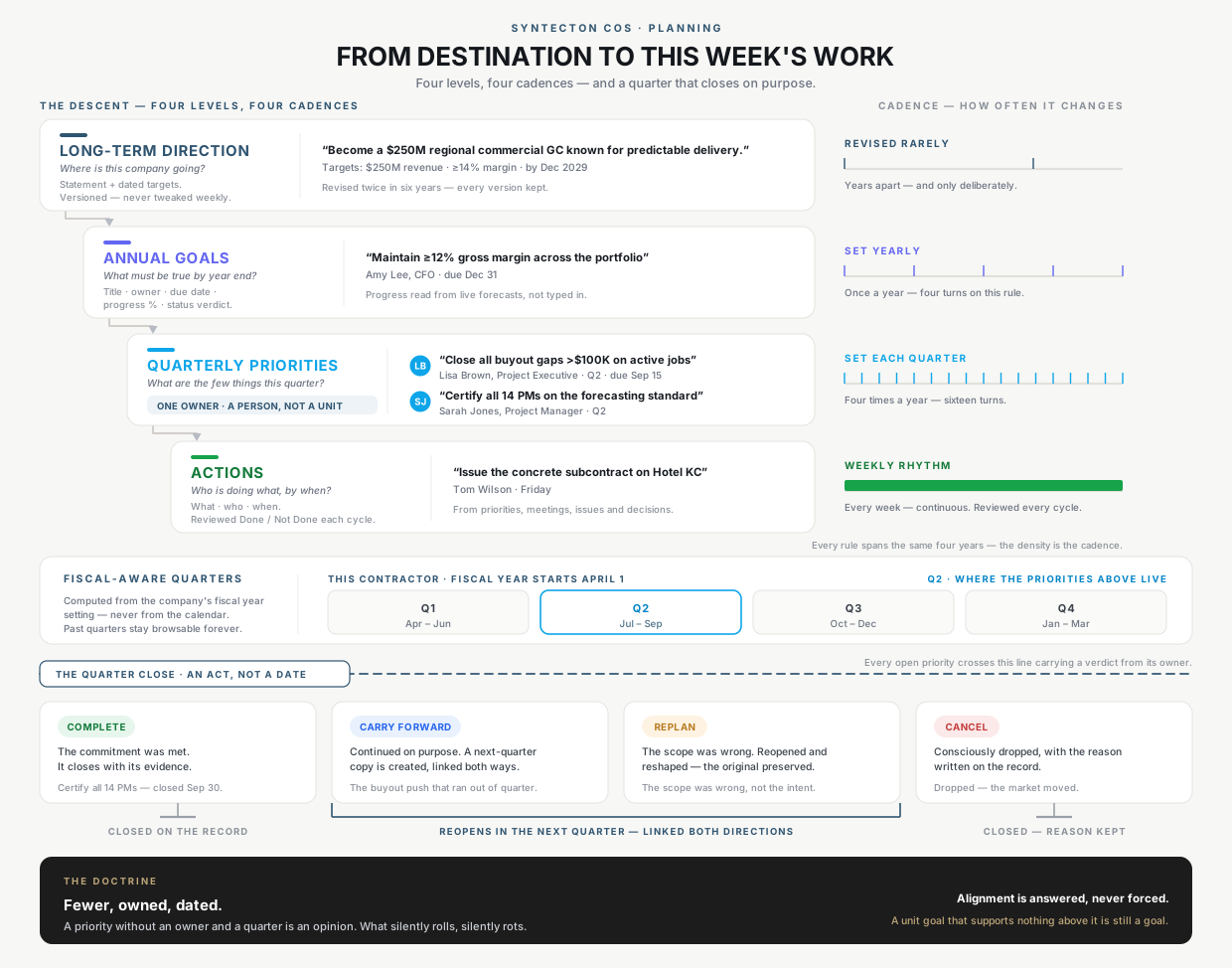
The planning hierarchy descending from Long-Term Direction to Annual Goals to Quarterly Priorities to Actions, each with its cadence, on fiscal-aware quarters, closing at the Quarter Close with four verdicts: complete, carry forward, replan, cancel.
The Planning Hierarchy — direction to actions, each level on its own cadence, closed each quarter by a verdict.

SYNTECTON COS — PLANNING: DIRECTION · GOALS · PRIORITIES

Board 3 of the COS Manual · How a destination becomes this quarter's work
The Doctrine
Fewer, owned, dated.
A priority without an owner and a quarter is an opinion. Planning turns opinions into commitments — and closes them on purpose.
Planning is the DIRECT and ALIGN stages of the operating loop, held as one connected spine:
Long-Term Direction → Annual Goals → Quarterly Priorities → Actions. Each level answers one question, changes at its own cadence, and is visible from the level above.
1The planning hierarchy — four levels, four cadences
LONG-TERM DIRECTION
Where is this company going?
Revised rarelyThe destination, with dated targets — revenue, margin, markets, geography. One per unit that needs one; the company always has one.
ANNUAL GOALS
What must be true by year end?
Set yearlyThis year's commitments toward the direction. Each has an owner, a due date, measurable progress, and a status verdict.
QUARTERLY PRIORITIES
What are the few things this quarter?
Set per quarterThe handful that get this quarter's attention. Each priority has one owner — a person, never a unit — and lives in exactly one fiscal quarter.
ACTIONS
Who is doing what, by when?
Weekly rhythmThe work itself — what · who · when. Actions flow from priorities, meetings, issues and decisions, and are reviewed every cycle.
THE LOOP CLOSES Planning sets the targets; KPI measures and the live project record report against them. When a priority drifts, it doesn't wait for a planning retreat — it raises an Issue in the next structured meeting, gets a Decision, and lands back in Actions. Planning is a rhythm, not an annual event.
2What each level looks like on a real contractor
LevelThe recordA real example
DirectionStatement + free-form targets (label/value) + target date. Edited deliberately, versioned, never tweaked weekly."Become a $250M regional commercial GC known for predictable delivery." Targets: $250M revenue · ≥14% margin · Hospitality/Healthcare/Multifamily · by Dec 2029.
Annual GoalTitle · owner · due date · progress % · status (On Track / At Risk / Off Track / Not Started)."Maintain ≥12% gross margin across the portfolio" — Amy Lee, CFO · due Dec 31 · read against live project forecasts, not a typed-in number.
Quarterly PriorityTitle · one owner · fiscal quarter · due date · optional "Supports" link upward · status verdict in every meeting."Close all buyout gaps >$100K on active jobs" — Lisa Brown · Q3 · due Sep 15. "Certify all 14 PMs on the forecasting standard" — Sarah Jones · Q3.
ActionWhat · who · when. Created from priorities, meetings, issues, decisions — reviewed Done / Not Done each cycle."Issue the concrete subcontract on Hotel KC — Tom, Friday." Small on purpose: actions are the week's work, not the quarter's.
Progress is measured against the operating record wherever the record knows the answer — margin goals read forecasts, backlog goals read awarded work. People add judgment; they don't re-type numbers.
3Fiscal-aware quarters
Quarters are computed from the company's fiscal year setting — never assumed from the calendar.
A contractor whose fiscal year starts April 1 sees Q1 = Apr–Jun on every quarter selector, every priority, every close — company-wide, no exceptions.
Every priority is bound to exactly one fiscal quarter. "Soon" and "this spring" are not quarters.
Past quarters stay browsable forever — flip back to any quarter and read it exactly as it closed, final verdicts included.
4The Quarter Close — nothing rolls silently
CompleteThe commitment was met. It closes with its evidence.
Carry ForwardContinued on purpose. A next-quarter copy is created and linked both directions.
ReplanThe scope was wrong. Reopened and reshaped — with the original preserved.
CancelConsciously dropped, with the reason on the record.
Closing a quarter is an act, not a date. Every open priority gets a verdict from its owner — the buyout push that ran out of quarter gets carried deliberately, not discovered half-dead in November. What silently rolls, silently rots.
5The cascade — company sets direction, units answer
Company
Annual Goal · Maintain ≥12% gross margin across the portfolioAmy Lee, CFO · due Dec 31
Construction
Unit Goal · Reduce forecast cost variance to <2% on active projectsJohn Smith, VP Construction · Supports: Company / ≥12% gross margin
Construction
Q3 Priority · Every active project on the monthly forecasting standardJohn Smith · Q3 · due Sep 30
Action
Certify the last 4 PMs on the forecasting cycleSarah Jones · this week
The "Supports" link makes alignment visible top-to-bottom on one screen: from the company's margin goal to the PM getting certified this week. But the cascade is answered, never forced — a unit goal with no Supports line is a first-class goal. The Estimating team may carry a hit-rate priority that supports nothing above it and needs no permission to exist. Ownership is mandatory; alignment is earned.
6Guardrails — the planning discipline
Owner + quarter, or it's an opinion. No priority enters the system owned by a department, "the team," or nobody.
Few beats many. The page shows a count — never a push to add more. Ten priorities is a list of wishes; four is a plan.
Alignment is optional; accountability is not. The system never demands a cascade — it demands a name and a date.
Direction is not a slogan. It carries dated, measurable targets — a destination you can be wrong about.
Status is a verdict, not a mood. On Track / At Risk / Off Track is called against the record in a structured meeting — and an off-track priority raises an Issue, not a longer status paragraph.
History is never rewritten. Closed quarters, dispositions, and superseded directions stay on the record — that's where next year's planning learns.
OUTCOME: Anyone in the company can trace this week's work to the company's destination in four steps — and every quarter ends the way it started: on purpose.
Board 4

The Operating Spine

Exceptions, Issues, Decisions, Actions — how problems surface and die.
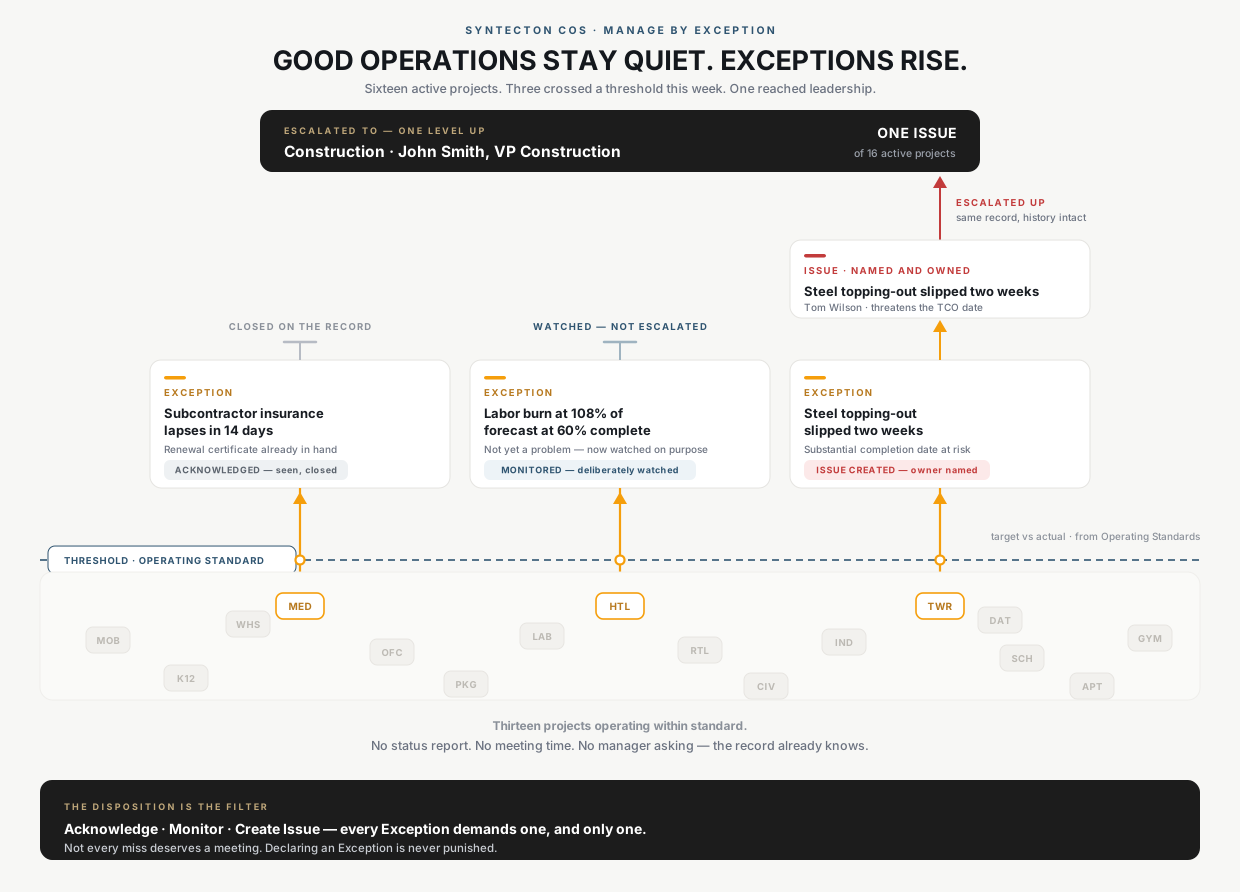
Managing by exception: operations inside threshold stay quiet while deviations rise as Exceptions.
Good operations stay quiet. Exceptions rise.

SYNTECTON COS — THE OPERATING SPINE

Board 4 of the COS Manual · Exceptions · Issues · Decisions · Actions — the surfacing-and-deciding machinery
The Doctrine · One Sentence
Good operations stay quiet. When reality misses the standard, the miss becomes a record — surfaced as an Exception, worked as an Issue, settled as a Decision, executed as Actions.
Board 1 gave you the loop. This board zooms into its working end: SURFACE → DECIDE → EXECUTE.
Four objects carry it — and the discipline is knowing which object you are holding: a signal is not a problem, a problem is not a conclusion, a conclusion is not work.
1Where this board sits — the loop, zoomed
DIRECT
Board 1
ALIGN
Board 1
MEASURE
Board 1
SURFACE
What requires attention?
ObjectsExceptions · Issues · up-only escalation
DECIDE
What are we going to do about it?
ObjectsThe Issues block · Decisions
EXECUTE
Who is doing what, by when?
ObjectsActions · the construction modules
THE TEST Every miss in a construction company already exists somewhere — an RFI aging, a burn rate drifting, an insurance certificate expiring. The spine decides whether it rises as a record or dies in a hallway conversation. Only one of those builds a company.
2Exception — the signal, not yet the problem
An Exception is a factual statement that reality missed the standard: a KPI outside tolerance, a commitment slipped, a threshold crossed. It carries evidence — target vs actual — and it demands exactly one thing: a disposition. Not a meeting. Not a discussion. A disposition.
AcknowledgeSeen. Understood. Closed.A sub's insurance lapses in 14 days — but the renewal certificate is already in hand. Noted on the record; nothing more owed.
MonitorWatch it, deliberately.GC labor burn at 108% of forecast at 60% complete. Not yet a problem — but now it is being watched on purpose, not by luck.
Create IssueThis needs to be worked.The steel topping-out milestone slipped two weeks and threatens the TCO date. It becomes a named Issue with an owner.
Not every miss deserves a meeting. The disposition is the filter that keeps the Issues queue honest — and keeps Exceptions cheap enough to declare without fear.
3Issue — the named problem with an owner
An Issue is a problem given a name and an owner — "Switchgear delivery threatens substantial completion. Tom Wilson." Unnamed problems get discussed forever; named problems get resolved.
Issues are worked in one place only — the Issues block of a Structured Meeting, the only section where discussion is permitted. Between meetings the queue holds them; it does not debate them.
Escalation moves up, never sideways. A project team that has exhausted its options escalates to its parent unit — the same record moves, history intact, origin visible. No duplicates, no cc-everyone email threads.
Every worked Issue ends in something — a Decision, an Action, or a deliberate escalation. An Issues block that ends in "good talk" has failed.
4Decision — the durable record
A Decision is what the company concluded: what was decided, by whom, when, in which meeting — and, when it matters, why. It outlives the Issue that produced it and the Actions that execute it.

Without the record

"Didn't we already settle the alternate switchgear last month?"

Same argument, re-fought quarterly, each time from zero.

The reasoning left when the project executive did.

With the record

Decided Aug 14, Construction Operations meeting: proceed with the alternate manufacturer, subject to the pricing threshold. Decided by John Smith. Rationale attached.

Reopening it is a deliberate act — a new Issue that cites the Decision — not amnesia.

Decisions are the company's institutional memory. A GC that records them stops paying the tax of re-deciding — and new leaders inherit reasoning, not folklore.
5Action — execution carried, verdict reviewed
One owner. One date. "Obtain final alternate pricing — John Smith — Friday." Shared ownership is no ownership; a date range is no date.
Reviewed by verdict: Done or Not Done. The Actions review in the meeting takes minutes, not the meeting. No status theater, no narration.
Never re-discussed in review. A stalled Action that needs conversation is raised as an Issue and worked in the Issues block — the review itself stays a roll call.
Actions chase their owners — Action Center, daily digest, and next meeting's review. Nothing is retyped; open Actions reload until they are done.
COS Actions direct the work; the construction modules do it. "Recover the schedule" is an Action; the re-sequenced look-ahead, the pushed submittal, the expedited PO live in the execution record — bridged, not copied.
6The spine, worked — one real trail
Exception · Tue
RFI answer time misses the standard
Structural RFI #214 open 16 days against the company's 10-day answer standard. Framing crew reaches that grid line in 9 days.
Disposition
Create Issue
Not a one-off: third engineer-of-record RFI to age out this month. The PM names it and takes ownership.
Issue · escalated
EOR responsiveness threatens frame schedule
Project team exhausted its options; escalated up to the Construction unit — same record, history intact.
Decision · Ops meeting
VP calls the owner's rep; weekly RFI page added to the OAC agenda
Decided by John Smith, on the record, rationale attached.
Actions · 2
Make the call · Add the OAC section
John Smith by Thu · Daniel Carter by Mon. Next week: Done / Not Done.
Total meeting time consumed: one Issues-block slot. Everything else happened on the record, between meetings. And no step of the chain is mandatory — an Action can exist without an Issue; a Decision may need no Action; an Exception can end at Acknowledge.
7The four objects at a glance
ObjectWhat it isIt demandsIt is finished whenConstruction-native example
ExceptionA signal, with evidence, that reality missed the standardA disposition — Acknowledge · Monitor · Create IssueDispositionedPortfolio forecast margin 13.1% against a ≥14% target
IssueA named problem with an ownerTo be worked in the Issues block — or escalated upResolved by Decision / Action, or escalatedMasonry sub showing default signals on the Medical Office job
DecisionA durable record of what was concluded — who, when, where, whyNothing. It endures; revisiting it is deliberateNever — it outlives its quarter"Proceed with alternate switchgear manufacturer, subject to pricing threshold"
ActionAccountable work — one owner, one dateExecution, then a verdict: Done / Not DoneDone — or raised as an Issue if stalled"Secure owner approval for the substitution — Sarah Jones — Aug 19"
8Guardrails — how the spine stays honest
Don't promote every Exception. If most misses become Issues, the queue drowns and the meeting dies. Acknowledge and Monitor are legitimate endings.
Don't work Issues in hallways. The Issues block is the discussion space. Side-channel resolutions leave no Decision and teach the queue it doesn't matter.
Escalation is up-only. A unit escalates to its parent — never sideways to a peer. Peer coordination is a conversation; escalation is a transfer of responsibility.
A Decision without "who and when" is an opinion. Record the decider, the date, the meeting — or you have recorded nothing.
Actions review is a roll call, not a retrial. Done or Not Done. The moment discussion starts, it's an Issue — raise it and move on.
Declaring an Exception is never punished. The superintendent who surfaces a slipping milestone early did the system a favor. Shooting messengers silences the loop.
OUTCOME: Trouble surfaces itself while it is still cheap. Problems get owners, arguments get conclusions, conclusions get executed — and the company remembers all of it. That is the spine holding.
Board 5

Structured Meetings

Not an agenda builder. Recurring formats that consume the record.
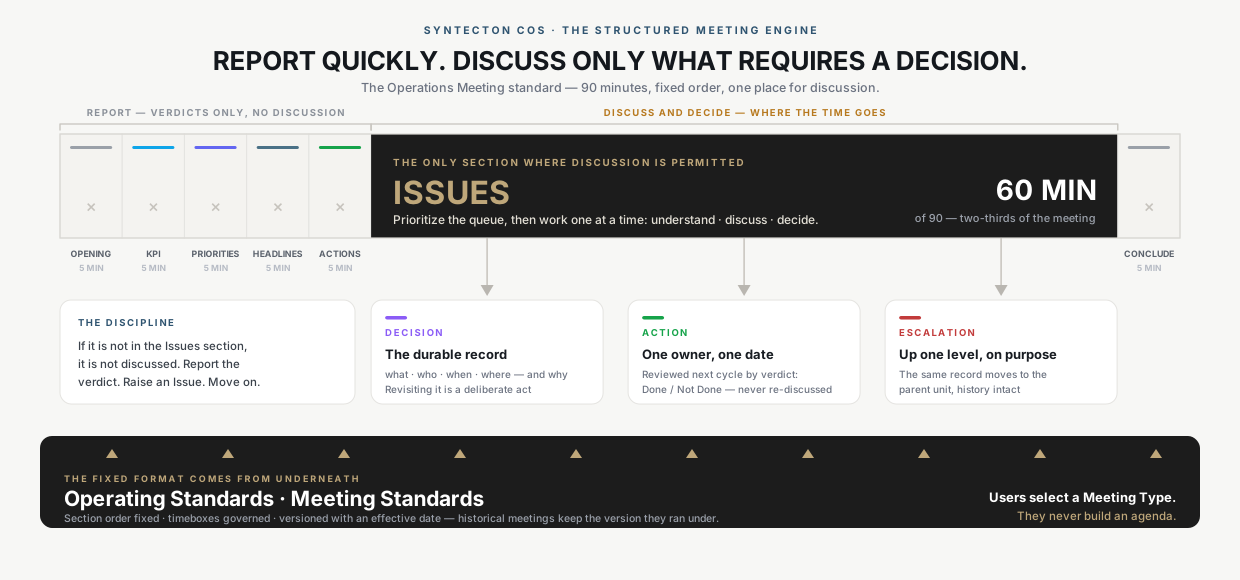
A ninety-minute structured meeting drawn to true proportion, with Issues taking the largest share of the time.
Ninety minutes, drawn to true proportion — Issues take most of it.

SYNTECTON COS — STRUCTURED MEETINGS

The Syntecton Operating Rhythm · Concept design · Syntecton terminology only
The Doctrine
The structure is the system.
Same meeting. Same order. Same timeboxes. Every time. The record changes — the rhythm doesn't.
Structured Meetings are named, recurring, timeboxed formats defined in Operating Standards. Users do not build agendas — they select a Meeting Type and the system provides the fixed structure, preloaded with the unit's live operating record. Discussion happens only in the Issues section.
1Purpose
Structured Meetings enforce the operating loop with a consistent format that builds discipline, saves time, and produces decisions.
  • Report, don't discuss — most sections
  • Surface only what matters
  • Spend the bulk of time solving Issues
  • Produce clear decisions and actions
2The Standard Anatomy — Operations Meeting · 90 min
SectionPurposeTimeDiscussion?
1 · OpeningCheck in, confirm attendance, one-line headlines. Anything needing resolution → Issue.5 min✕ NO
2 · KPI ReviewEach measure: On Target or Off Target vs the record. Off-target → Raise Issue. No solving here.5 min✕ NO
3 · Quarterly PrioritiesVerdict per priority: On Track / At Risk / Off Track / Complete. Intervention needed → Raise Issue.5 min✕ NO
4 · HeadlinesMeaningful project & field signals only — milestones, owner events, safety, procurement. No status shows.5 min✕ NO
5 · Actions ReviewPrior cycle's actions: Done / Not Done. Stalled action needing discussion → Raise Issue.5 min✕ NO
6 · IssuesThe only place for full discussion. Prioritize the queue, then work one at a time: understand → discuss → decide. Every worked issue ends in a Decision and/or Action.60 min✓ YES
7 · ConcludeAuto-recap: decisions made, actions with owners + due dates, open issues, escalations. Close on time.5 min✕ NO
THE DISCIPLINE: If it's not in the Issues section, it's not discussed. Quick report. Record the verdict. Move on.
3Principles
Fixed structureEach Meeting Type has a fixed anatomy and timeboxes. It does not change week to week.
Report, don't discussKPI, Priorities, Headlines, Actions are reviews of the record — verdicts only.
Discussion only in IssuesOne place for debate, problem-solving, and decisions.
Outcome focusedMeetings produce Decisions and Actions with owners and due dates.
Recurring & predictableSame day, same time, same format — the repetition is the discipline.
4How it works in Syntecton
1Pick Meeting Typewhen creating the recurring series
2Structure auto-appliedfixed sections + timeboxes load from the standard
3Run the meetingfacilitation mode · live-bound records · section timers
4Outcomes capturedDecisions, Actions, escalations on the operating record
5Standard Meeting Types
LeadershipWeekly · 90 min
OperationsWeekly · 90 min
DepartmentWeekly · 60 min
TeamWeekly · 60 min
Project TeamWeekly · 60 min
Quarterly PlanningQuarterly · half day
Annual PlanningAnnual · full day
Each type has its own fixed anatomy. Syntecton ships all seven; companies adopt or tune their standard once.
6Where the formats live
All Meeting Types and their structures are governed records in
Operating Standards → Meeting Standards.
  • Companies tune timeboxes (within guidelines) and participants — the order and purpose of sections stay fixed
  • Changes create a new version with an effective date
  • Historical meetings keep the version they ran under
7Recording the meeting
Minutesper section
Actionswhat · who · when
Issuesraised · worked
Decisionsdurable records
Activityaudit trail
Open actions and unresolved issues reload automatically at the next occurrence — nothing is retyped, nothing is lost.
8Guardrails — the rules
Section order in a standard meeting cannot be edited. One clearly-marked Special Item may be appended when reality demands it.
Discussion is not permitted in any section except Issues — review sections offer verdicts and Raise Issue only.
Stay within timeboxes. Overflow goes to the parking lot — parked items land in the Issues queue or carry to the next occurrence.
Every Issues discussion ends with a Decision and/or an Action — or an intentional escalation upward.
Leave the meeting with clear actions and owners — the Conclude recap confirms every WHAT / WHO / WHEN.
The structure enforces the discipline. The team knows exactly how the meeting runs before entering the room.
OUTCOME: Same meeting. Same structure. Better decisions. Stronger execution — because the meeting reviews the live construction record instead of reconstructing it.
Board 6

First 30 Days

Standing up your operating system, week by week.
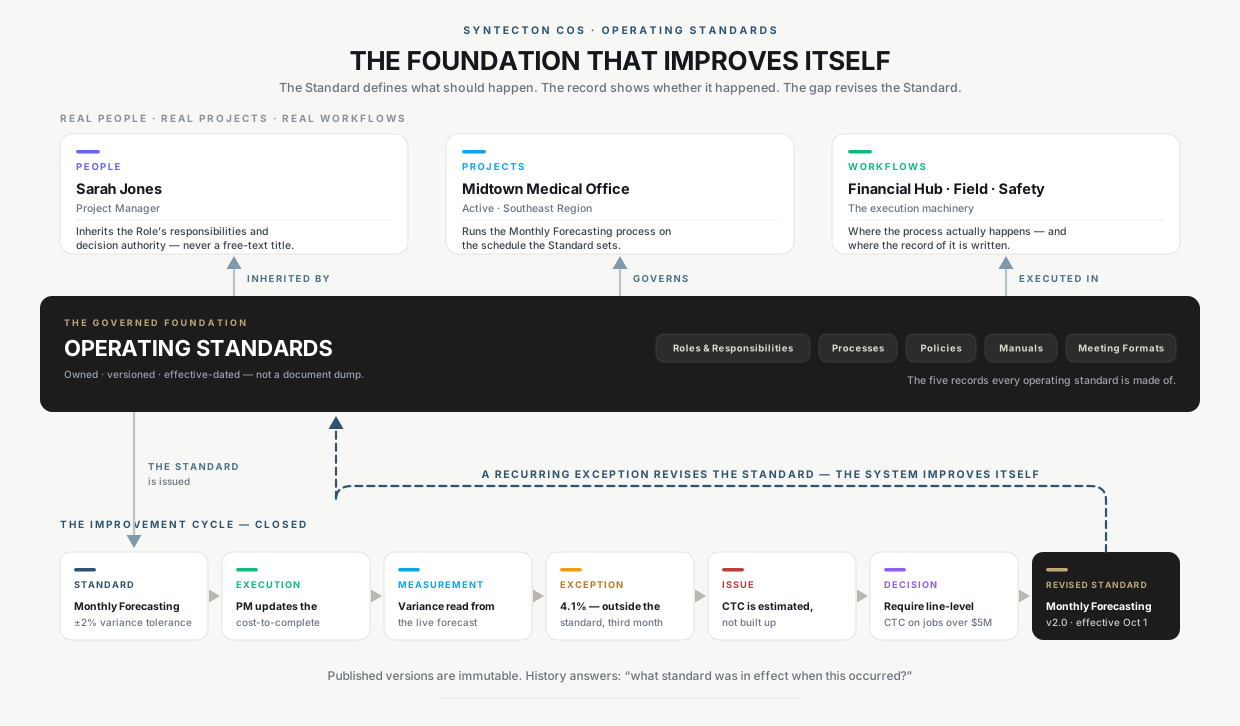
The governed Operating Standards foundation and the cycle by which recurring exceptions improve it.
The governed foundation — and the cycle by which it improves itself.

SYNTECTON COS — FIRST 30 DAYS

Standing up your operating system · A week-by-week sequence for the leadership team
The Doctrine · One Sentence
Structure first, direction second, rhythm third, spine last — the habit precedes the automation, and the system is running when it no longer needs you to push it.
You do not adopt an operating system by reading about it. You stand it up — in four weeks, in this order — because each week builds on the one before:
a map before goals, goals before measures, measures before meetings, meetings before the spine has anything to carry.
1The month at a glance
WEEK 1 · STRUCTURE
Who are we, honestly?
You buildOrganization Map · units · leaders with titles · the team placed
WEEK 2 · DIRECTION
Where are we going?
You buildLong-Term Direction · Annual Goals · Quarterly Priorities with owners
WEEK 3 · MEASUREMENT & RHYTHM
How will we know — and when will we meet?
You buildFirst KPIs · the recurring Structured Meetings · the first Operations meeting
WEEK 4 · STANDARDS & SPINE
Can the loop turn on its own?
You buildRole Library · Company Operating Manual · the first full loop: Exceptions → Issues → Decisions
30 DAYS One month is enough because Syntecton ships the standards — meeting formats, a seeded Role Library, a seeded Company Operating Manual. You are not authoring an operating system from a blank page; you are adopting one and making it yours.
2Week 1 — Structure: build the Map honestlyDays 1–7
1Create the units as they actually are — the company, then departments, regions, teams. Map the company you run today, not the org chart you drew for the bank. If Preconstruction is two estimators reporting to the owner, that's the unit.
2Name a leader for every unit — with the title. Role assignment is the titles system: VP Construction, Director of Field Ops, Chief Estimator. A unit with no leader is a decision you're deferring; mark it vacant rather than inventing one.
3Place the team. Every person in the company lands in a unit — superintendents under Field Ops, PMs under Project Management, the office manager somewhere real. Projects attach to the units that run them.
4Make the Map the company home from day one. When anyone opens the company, they see the structure — who owns what, which projects live where, what's at risk. The Map is not documentation; it's the front door.
By FridayEvery person, every project, every unit is on the Map — and at least one thing on it surprised you. That surprise is the point: the Map just told you something the org chart never did.
3Week 2 — Direction: write it down, pick the fewDays 8–14
1Write the Long-Term Direction — where this company is going and what kind of contractor it intends to be. "$120M of negotiated commercial work with a self-perform concrete division by 2029" beats a mission statement every time.
2Set this year's Annual Goals — the handful of measurable outcomes that would make this year a success: revenue, margin, backlog quality, safety record, key hires.
3Pick the quarter's few Priorities — each with one owner. Three to five, not fifteen. "Close the procurement exposure on the two hospital jobs — Lisa Brown — Sep 30." Alignment to goals above is welcome; it is never forced.
4Let units set their own. Construction, Precon, Finance each write goals and priorities in their own workspace. Direction flows down; it is not photocopied down.
By FridayAnyone in leadership can answer, without looking: where are we going, what matters this year, what are MY few for this quarter — and who owns each one.
4Week 3 — Measurement & rhythm: numbers, then a calendarDays 15–21
1Define the first KPIs — a short list per unit, each with a target and an owner who understands it: forecast gross margin, RFI answer time, backlog months, recordable incidents, unapproved change order exposure.
2Manual entry is fine. The PM typing this week's margin number is not a workaround — it is the habit forming. The habit precedes the automation; system-derived measures can take over a KPI later, one at a time, without redesign.
3Schedule the recurring Structured Meetings from Syntecton's shipped Meeting Standards — Leadership and Operations weekly, unit meetings where the Map says a real team exists. Same day, same time, standing.
4Hold the first Operations meeting. Fixed anatomy, timeboxes on, discussion only in Issues. It will feel stiff. Run it anyway — the third one will feel like the company.
By FridayThe first meeting has happened, on the record: KPIs reviewed by verdict, at least one Issue worked to a conclusion, Actions leaving the room with owners and dates.
5Week 4 — Standards & spine: run the first full loopDays 22–30
1Adopt and adapt the seeded Role Library. Syntecton ships the seats — Project Manager, Superintendent, Project Executive, Estimator. Edit the responsibilities to match how YOUR company builds; delete what you don't do.
2Make the Company Operating Manual yours. The seeded manual is a running start, not a decree. Rewrite the sections that are wrong for you; publish v1.0 knowing versions exist so it can grow.
3Let Exceptions surface. With KPIs live and standards named, misses now have something to miss. An RFI aging past the answer standard, a burn rate off target — declare them, disposition them: Acknowledge, Monitor, or Create Issue.
4Work Issues in the meeting; record the first Decisions. The week-4 Operations meeting runs the whole spine: Exceptions reviewed, Issues worked in the Issues block, Decisions on the record with who and when, Actions out the door.
By FridayThe loop has turned once, end to end — DIRECT → ALIGN → MEASURE → SURFACE → DECIDE → EXECUTE — entirely on the record. From here it doesn't restart; it repeats.
6The system is running when…
Meetings happen without the founder forcing them. The Operations meeting runs on time, in format, even the week the owner is on a job walk in another state.
Issues die in the queue, not in hallways. When the switchgear slips, someone raises an Issue — instead of grabbing the PM by the coffee machine and calling it handled.
Decisions are findable. "Why did we self-perform the site concrete on that job?" has an answer with a name and a date — not a shrug and a story.
The Map matches reality. New hire, new project, a team reorganized — the Map changes the same week reality does, because everyone works from it.
Numbers arrive without being chased. KPI entries show up on schedule because owners own them — and an off-target number raises its own hand as an Exception.
Actions come back as verdicts. Next meeting's review is a two-minute roll call of Done / Not Done — nobody re-explains, nobody renegotiates.
7Guardrails — the standing-up traps
Don't map the company you wish you had. An aspirational Map is fiction, and everyone who works there knows it. Restructure later, on the record, as a Decision.
Don't wait for perfect KPIs. Five imperfect measures reviewed weekly beat a measurement project that ships next quarter. Refine targets in quarter close.
Don't skip a meeting because the week is brutal. The brutal weeks are what the rhythm is for. Cancel twice in month one and you've taught the company it's optional.
Don't let the founder own everything. If one name owns most Priorities, Issues, and Actions, you've built the founder's task list, not an operating system. Ownership is the product.
Don't rewrite the seeded standards from scratch. Adapt, publish, improve by version. A company that spends week 4 wordsmithing the manual never reaches the loop.
Don't extend the runway. Thirty days is the point. A six-month rollout is how operating systems die in committee — stand it up rough, and let the loop improve it.
OUTCOME: In one month the company goes from running on memory and heroics to running on a system — structure on the Map, direction written down, numbers watched, a rhythm that holds, and a spine that turns trouble into decisions. Week five is just week four, again. That's the design.
Keep reading

The Construction Operating System guides

Four long-form guides behind the doctrine on these boards.

Start where you are

Build your Construction Operating System

The doctrine on these boards is the system Syntecton ships — the Organization Map, the planning hierarchy, the operating spine, structured meetings, KPIs and Operating Standards. Bring your company and we will walk through what standing it up looks like on your projects.